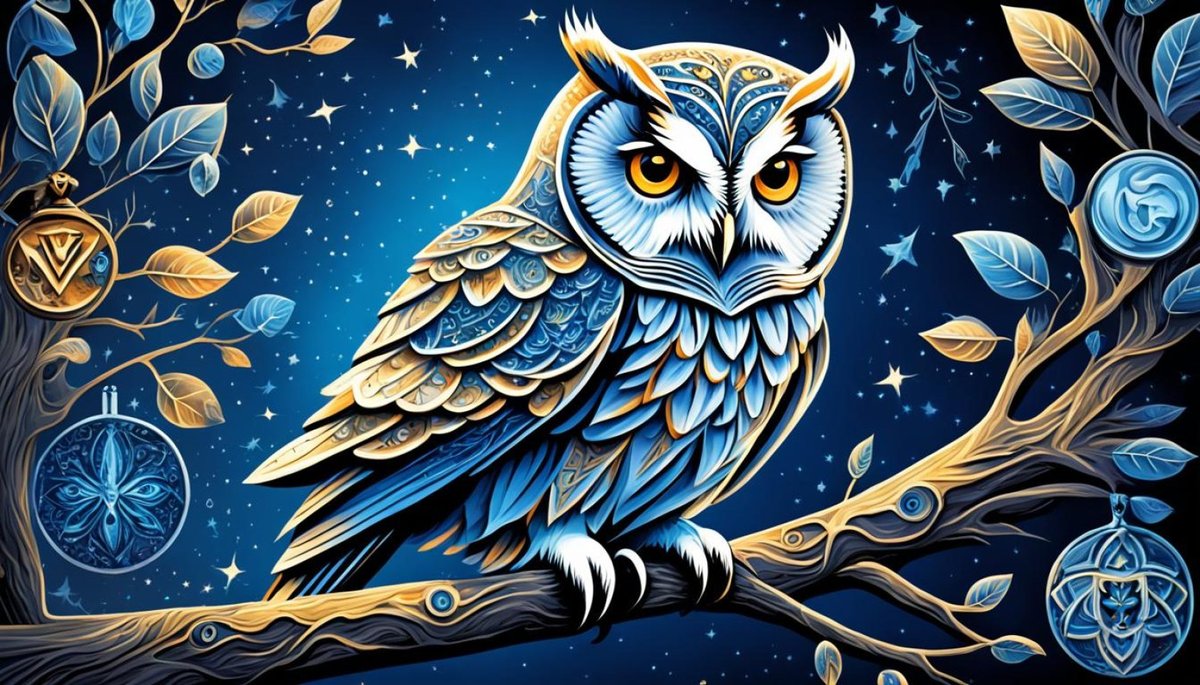
The night's watchful eye, a silent hunter, a bringer of both profound insight and unsettling omens – few creatures capture the human imagination quite like the owl. From ancient myths to modern storytelling, the symbolism and life lessons represented by owl weave a complex tapestry that reflects our deepest curiosities about knowledge, mystery, and the cycles of existence. This isn't just about a bird; it's about what the owl mirrors back to us about ourselves and the world we navigate, often in the shadows.
At a Glance: Key Takeaways from the Owl's Symbolism
- Duality is Key: Owls uniquely symbolize both profound wisdom and chilling mystery, life and death, light and shadow.
- Seek Deeper Truths: Their association with knowledge (Athena, Minerva) teaches us to look beyond the obvious.
- Embrace the Unknown: As nocturnal creatures, they represent the unseen, the intuitive, and the courage to explore what lies beneath the surface.
- Acknowledge Cycles: Their connection to death and change reminds us of life's constant ebb and flow, encouraging acceptance and transformation.
- Value Solitude & Observation: Owls model self-reliance and the power of quiet contemplation before action.
- Develop Inner Vision: Their exceptional night sight encourages us to cultivate our intuition and foresight.
The Enigmatic Owl: A Symphony of Duality
Owls, with their piercing gaze and hushed flight, have always occupied a unique, often contradictory, space in human culture. They are creatures of the twilight, bridging the conscious world of day with the subconscious realm of night. This inherent duality is the cornerstone of their symbolism. You'll find them revered as sacred guardians of knowledge in one culture, then feared as harbingers of doom in another. It's this very complexity that makes them such potent teachers.
Understanding the owl isn't about choosing one interpretation over another. It's about recognizing that true wisdom often resides in the ability to hold opposing ideas simultaneously, to see the interconnectedness of light and shadow, life and death. The owl challenges us to embrace ambiguity, to find comfort in the unknown, and to understand that sometimes, the greatest lessons are found not in bright sunshine, but in the quiet depths of the night.
Wisdom's Gaze: Learning from the Owl's Intellect
Perhaps the most widely recognized aspect of owl symbolism is its profound connection to wisdom and knowledge. This isn't a surface-level wisdom, but one that implies a deep understanding, an ability to see what others miss.
Think of the Ancient Greeks, who revered the owl as sacred to Athena, their goddess of wisdom, strategic warfare, and crafts. The Romans echoed this, linking owls to Minerva. This association wasn't arbitrary; it stemmed from the owl's keen sight, its ability to navigate the darkness, and its seemingly contemplative demeanor. It's why owls are depicted on ancient Greek coins and are even referenced in philosophy, like Hegel's "Owl of Minerva," which suggests wisdom often arrives at dusk, after the day's events have unfolded, allowing for reflection and true insight.
Indigenous cultures, too, often view owls as custodians of profound understanding. The Creek Indians, for instance, saw them as guardians of sacred knowledge, while the Ainu of Japan revered them as protectors of their villages, known as kotan kor kamuy. This tells us that wisdom, in the owl's lesson, isn't about accumulating facts but about discerning truth, protecting sacred insights, and applying knowledge with foresight.
Life Lesson: The owl's association with wisdom urges you to cultivate a thirst for deeper understanding. Don't be content with superficial explanations. Practice critical thinking, seek out hidden truths, and be patient enough to let understanding unfold over time, just as the owl waits for the opportune moment to strike. This means being a thoughtful observer, much like the owl, before acting.
Shrouded in Mystery: The Owl's Connection to the Unseen
While wisdom shines bright, the owl's nocturnal habits inherently link it to the mysterious, the occult, and the liminal spaces between worlds. Its silent flight, often described as ghostly, and its eerie, often haunting calls, have long fueled superstitions and folklore.
Across many cultures, owls are seen as familiars to witches, spirits of the night, or messengers from other dimensions. Their ability to operate unseen in the dark makes them symbols of intuition, psychic awareness, and the subconscious mind. They whisper secrets that the daylight world often ignores, guiding those who are willing to listen to their inner voice and explore the shadows within themselves. In this sense, they don't just protect knowledge; they also hold the keys to the owl's connection to the supernatural and hidden realms.
Life Lesson: The owl encourages you to embrace the unknown and trust your intuition. Not everything can be explained by logic or seen in plain daylight. Sometimes, understanding comes through feeling, through sensing, and through courageously stepping into unfamiliar territory. This means being open to possibilities that defy conventional wisdom and listening to the subtle cues that life presents.
Harbinger or Guide? Navigating Omens of Change
Here's where the owl's symbolism often takes a darker turn. In many traditions, the owl is unfortunately seen as an omen of death, misfortune, or impending change. The Kikuyu people, Mesoamerican folklore, and even Jewish traditions carry tales of owls signaling doom, their calls serving as a chilling prophecy. Shakespeare famously wove this into his plays, depicting the owl as a foreteller of demise. Some Native American tribes even associate specific owl types with virtuous or wicked souls, or see them as escorts to the underworld.
However, even in this somber aspect, there's a powerful lesson. Death, in a symbolic sense, doesn't always mean a physical end. It often represents the end of a cycle, the transformation of an old way of being, or the necessary shedding of what no longer serves you. An owl as an omen of "death" could be a powerful catalyst for introspection, urging you to examine what needs to die within your life—old habits, limiting beliefs, or stagnant relationships—to make way for new growth.
Interestingly, despite these darker associations, some traditions also see owls as guides and allies, helping hunters find game or revealing hidden truths. Yet, even here, there's a caveat: they can also be agents of betrayal, reinforcing their complex, unpredictable nature.
Life Lesson: The owl, in its role as a harbinger, teaches you to confront change, even when it feels daunting. Understand that endings are often prerequisites for new beginnings. Rather than fearing the owl's presence, consider it a call to reflect on cycles in your own life—what needs to be released, and what new potential awaits? It's about accepting the inevitability of transformation.
The Solitary Sentinel: Independence and Self-Reliance
Owls are primarily solitary hunters. They operate alone, relying solely on their own acute senses and strategic prowess to survive. This inherent characteristic imbues them with the symbolism of independence, self-reliance, and quiet observation. They don't need a flock to validate their existence or amplify their efforts. They are complete unto themselves.
This solitude isn't about loneliness; it's about self-sufficiency and deep inner knowing. An owl quietly perches, observing, waiting, processing information before making a move. It reminds us of the power of stepping back, detaching from the noise, and trusting our own judgment.
Life Lesson: The owl encourages you to value solitude and cultivate self-reliance. Take time for introspection, away from external influences, to truly hear your own thoughts and desires. Learn to trust your instincts and make decisions based on your inner compass, rather than constantly seeking external validation. There's immense strength in standing alone when necessary.
Vision Beyond Sight: Foresight and Inner Clarity
Perhaps one of the most compelling lessons from the owl comes from its extraordinary visual prowess. With large, forward-facing eyes, owls possess exceptional night vision, allowing them to see in near-complete darkness. This isn't just about physical sight; symbolically, it represents clarity, foresight, and profound spiritual insight.
Their ability to rotate their heads up to 270 degrees (thanks to extra neck vertebrae and an efficient vascular system) allows them an almost panoramic view without moving their bodies. This symbolizes the ability to see things from multiple perspectives, to understand a situation holistically, and to gain uncovering hidden truths and patterns that might be obscured to others. It’s about more than just looking; it's about truly seeing, both outwardly and inwardly.
Life Lesson: The owl urges you to develop your intuition and foresight. Look beyond the superficial and train yourself to perceive underlying currents, future possibilities, and the deeper meanings in situations. Cultivate inner clarity by observing without judgment, much like an owl scanning its environment. This kind of vision helps you anticipate challenges and seize opportunities.
Lessons from Their Nature: How Biology Informs Symbolism
To truly appreciate the owl's profound symbolism, it helps to understand its incredible natural history and behaviors. These biological adaptations aren't just fascinating; they are the very root of many of the life lessons we draw from them.
- Nocturnal Adaptations: Their large eyes, equipped with an abundance of rod cells, are designed for how owls master the night. Facial discs around their eyes funnel sound to their highly sensitive ears, allowing for pinpoint accuracy in locating prey in absolute darkness. These adaptations underscore their symbolic link to intuition and seeing what others cannot.
- Silent Flight: The unique serrated leading edges on their wings break up airflow, enabling the incredible art of silent hunting. This silent approach contributes to their "ghostly" reputation and links them to mystery and the unseen. It also speaks to the power of discretion and moving through life with purpose and minimal disruption.
- Head Rotation: As mentioned, their flexible necks allow for a massive range of motion, compensating for their fixed eye sockets. This physical trait becomes a metaphor for adaptability, open-mindedness, and the ability to survey a situation from every possible angle before making a move.
- Distribution & Diet: Found on every continent except Antarctica, owls thrive in diverse habitats, from forests to deserts to urban areas. This adaptability speaks to resilience and finding one's place in varying circumstances. Their carnivorous diet and habit of regurgitating pellets highlight their efficiency and connection to the raw cycles of nature.
Understanding these natural marvels transforms abstract symbolism into concrete examples of mastery and survival.
Owls Across Cultures: A Tapestry of Beliefs
The owl's varied symbolism is a testament to its universal impact on human imagination.
- Ancient Greece & Rome: A symbol of wisdom, intellect, and foresight, foretelling victory in battle.
- Medieval Europe: Feared as witches' familiars, omens of death and misfortune, often associated with dark magic.
- Eastern Traditions: In Japan, fukurou (owl) can symbolize good fortune due to wordplay. In Hinduism, the owl (often a barn owl) is the vehicle of Lakshmi, the goddess of wealth and prosperity, linking it to abundance and auspiciousness.
- Native American Folklore: Diverse interpretations range from sacred guardians of knowledge to tricksters, child-snatching spirits (Sahaptin tribe), or vengeful entities. Stories sometimes explain their physical traits, like the flat face in "The Owl Girl."
- Mesoamerican Cultures: Often seen as companions to death gods and associated with the underworld.
These diverse interpretations highlight that while the owl's core traits (nocturnal, silent, keen-sighted) are universal, how cultures interpret them depends on their prevailing worldviews, fears, and values.
The Modern Owl: From Storybooks to Conservation
Today, the owl continues to captivate and teach, albeit in new forms.
- Children's Literature: Owls are frequently portrayed as wise mentors, kind professors, or magical companions. Think of All about Owl from Pooh Bear who offers often-rambling but well-meaning advice, or Archimedes, the clever owl from The Sword in the Stone. The enchanting owls of the Harry Potter series, delivering mail and companionship, have cemented their image as trusted guides. This reflects our collective desire for guidance and the belief that wisdom can be found in unexpected, quiet places.
- Conservation Icons: As nocturnal and often forest-dwelling species, owls have become powerful icons for wildlife conservation. They represent the delicate balance of ecosystems and the need to protect natural habitats, raising awareness for countless other species that share their world.
- Natural Pest Control: Historically, and even today, farmers and gardeners welcome owls. In places like Germany (Eulenflucht), Austria, and Italy, owls were encouraged into barns for their natural ability to control rodent populations. This practical application underscores their role as allies in maintaining ecological balance.
- Protection Rituals: In some parts of Nepal, owl feathers, bones, or even heads are used in rituals, believed to offer protection against evil, reinforcing their ancient connection to spiritual defense.
These modern representations show the enduring presence of owls in pop culture and how their symbolic power adapts to contemporary needs, from storytelling to environmental advocacy.
Beyond Superstition: Embracing the Owl's Practical Wisdom
So, what does all this mean for you, beyond fascinating folklore? The owl’s rich symbolism offers tangible life lessons that can enrich your perspective and guide your actions.
- Cultivate Deeper Insight: Don't just accept things at face value. Ask questions, investigate, and strive to understand the underlying truths in any situation.
- Trust Your Intuition: When logic falters, pay attention to your gut feelings. The owl reminds us that there's valuable information beyond what the eye can see.
- Embrace Change: View endings not as losses, but as necessary transformations. What old patterns or beliefs are you ready to let go of to make space for something new?
- Value Solitude: Schedule time for quiet reflection. Disconnect from distractions to connect more deeply with yourself and your inner wisdom.
- Observe Before Acting: Like the silent hunter, take time to assess a situation from all angles before making a move. Patience and strategic observation often lead to better outcomes.
- Seek Multiple Perspectives: Don't get stuck in a single viewpoint. The owl's head rotation teaches us the value of seeing things from different angles.
Common Questions About Owl Symbolism
Are owls always a bad omen?
Not at all. While some cultures link owls to death or misfortune, many others see them as symbols of wisdom, protection, good fortune, and wealth. The interpretation often depends on specific cultural beliefs and personal context. Rather than fearing an owl, consider what message of change or insight it might bring.
What does seeing an owl mean for me?
Seeing an owl can be a powerful symbol. It often suggests a need to pay closer attention to your intuition, seek deeper knowledge, or prepare for a significant transition in your life. It might be a call to observe more, speak less, or confront an uncomfortable truth. Reflect on what themes from the owl's symbolism resonate most with your current life circumstances.
Why are owls considered wise?
Owls are considered wise primarily due to their nocturnal nature, exceptional vision in darkness, and silent, observant demeanor. These traits symbolize the ability to see beyond illusions, gain hidden knowledge, and possess a profound understanding that isn't easily swayed by superficial appearances. Their association with Athena, the Greek goddess of wisdom, solidified this connection in Western thought.
Your Journey with the Owl's Wisdom
The owl, with its dual nature of wisdom and mystery, offers a profound mirror to our own lives. It encourages us to look beyond the obvious, to trust our inner senses, and to navigate life's inevitable changes with grace and foresight. So, the next time you hear an owl's hoot in the stillness of the night, or encounter its image, let it be a reminder: there's wisdom to be found in the shadows, insight in the quiet moments, and strength in embracing the full spectrum of life's mysteries. What hidden truths will you uncover by looking through the owl's eyes?