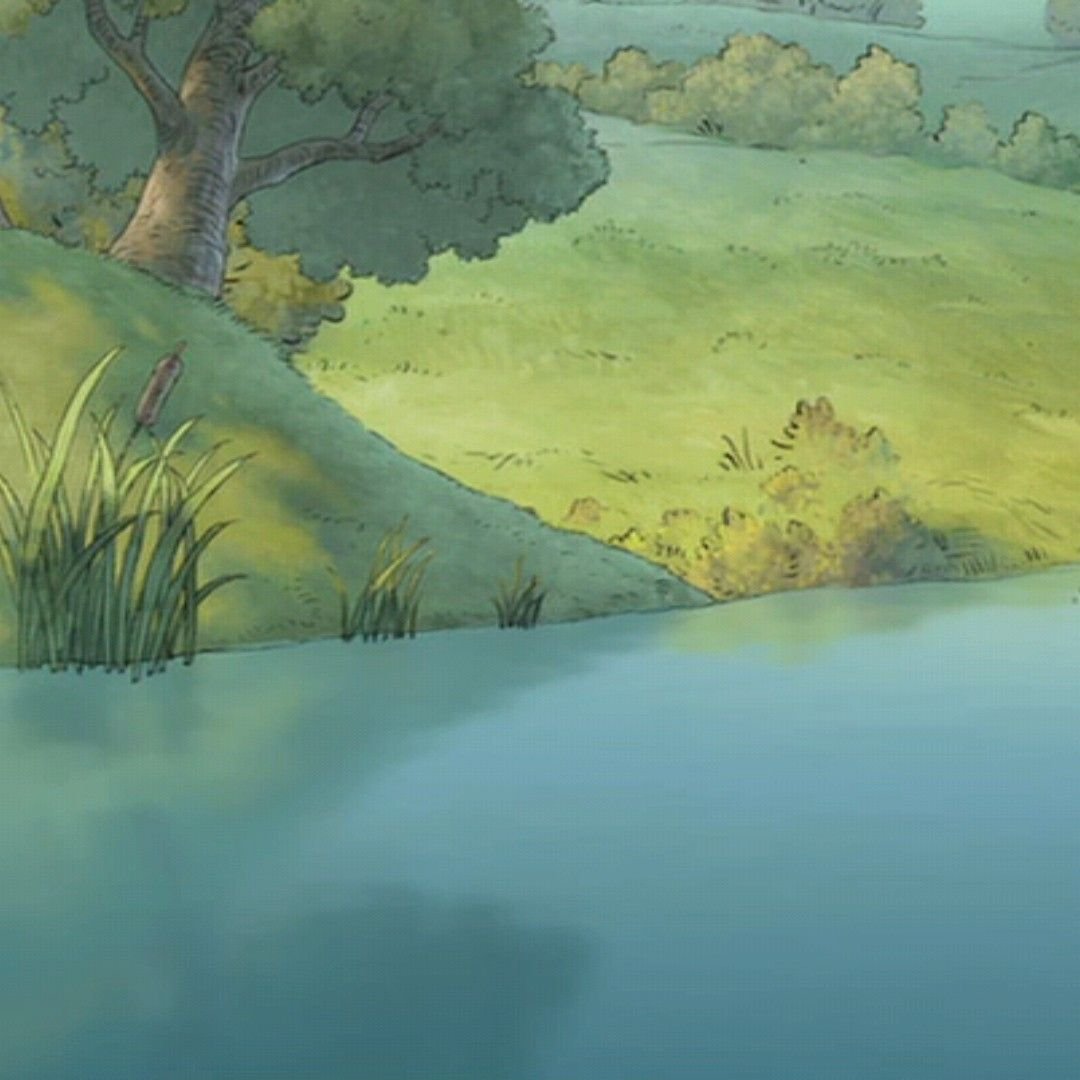
The old tree, gnarled and ancient, stood tall in the Hundred Acre Wood, its hollow trunk a beacon of erudition and — occasionally — misplaced confidence. Inside, amidst dusty tomes and half-finished scrolls, lived Owl, a character whose presence, stories, and appearances are as integral to the fabric of Pooh's world as honey to a pot. Whether dispensing well-meaning but often long-winded advice, offering comfort, or simply being himself, Owl brings a unique intellectual — if sometimes self-important — charm to every adventure.
At a Glance: Understanding Owl in the Hundred Acre Wood
- Who He Is: A stuffed owl, characterized as wise, friendly, and notably verbose.
- His Role: The self-appointed intellectual and elder statesman of the Hundred Acre Wood, often consulted for advice or information.
- His Home: A grand, ancient tree in a central, significant part of the Wood, often serving as a gathering place.
- Key Traits: A love for long words, elaborate stories, and a generally kind heart, despite occasional pomposity.
- Significance: Represents the voice of reason (or perceived reason) and a touch of the academic amidst the simple joys of the Wood.
- Beyond Milne: Features prominently in Disney adaptations and, controversially, in more modern, darker interpretations.
The Esteemed Scholar: Peeking Into Owl's Perch
Owl, as introduced in A. A. Milne's original books, is more than just a character; he's an institution. A resident of the Hundred Acre Wood, he’s depicted as a stuffed owl, brimming with self-importance and an almost boundless supply of anecdotes. He might not always be as wise as he believes himself to be, but his intentions are invariably good, and his friendship with Winnie-the-Pooh and the ever-anxious Piglet is steadfast. He’s one of the few characters who can read and write, even if his spelling leaves a little to be desired, and he often takes it upon himself to guide his less 'intellectual' friends through predicaments.
His home, an old tree, is a central landmark in the Wood, a place where characters frequently gather for discussions, celebrations, or to seek his often lengthy counsel. It's a testament to his perceived status that his house is so well-known and often visited, reflecting his position as the go-to figure for grand pronouncements and elaborate explanations.
Owl's Original Footprints: Memorable Tales from Milne's Pages
A. A. Milne's books, Winnie-the-Pooh and The House at Pooh Corner, are where Owl truly shines, revealing the core of his character through his interactions and often-misguided brilliance.
When Eeyore Lost His Tail and Owl Found It
One of Owl's earliest and most charming appearances comes when Eeyore is distressed about losing his tail. Ever the helpful (and verbose) one, Owl offers to search for it. He eventually discovers it – being used as a bell pull on his own front door! His triumphant return of the tail to Eeyore, complete with a dramatic retelling of the discovery, is a classic example of his benevolent, if slightly oblivious, nature. He genuinely believed he had performed a great service, even if he was inadvertently the cause of the problem.
Eeyore's Unforgettable Birthday Presents
In "In Which Eeyore Has a Birthday and Gets Two Presents," Owl attempts to contribute to Eeyore's celebration. His gift is a pot, which Pooh had previously emptied of honey and intended for Eeyore. Owl, misunderstanding, presents it as a "useful pot to put things in," complete with his own scrawled (and misspelled) "Happy Birthday" message. This moment perfectly encapsulates Owl's endearing blend of kindness, self-importance, and slightly off-kilter practical skills. It's not the gift itself, but the grand gesture and the thought (however convoluted) that count with Owl.
Piglet's Peril and Owl's Ingenuity
When "Piglet is Entirely Surrounded by Water," Owl's house becomes a crucial refuge. Being on the highest ground, it’s the only dry spot for miles, and it becomes a temporary haven for many of the beloved residents of the Wood during the flood. It’s Owl who devises the ingenious (for the Wood, anyway) plan to send a message in a bottle to Christopher Robin, appealing for help. This moment showcases his genuine intellect and problem-solving abilities, even if his explanation of the process is a long-winded affair involving numerous "P's" and "R's."
The Moving House: A New Home for Eeyore (and Owl)
Perhaps Owl's most significant story arc revolves around his house being blown down in a gale in "In Which a House Is Built at Pooh Corner for Eeyore." Pooh and Piglet, wanting to help Eeyore, decide to build him a new house. Unbeknownst to them, they dismantle Piglet's house piece by piece to create Eeyore's "new" dwelling. Later, when Owl is left homeless, Pooh and Piglet find him a new residence – which turns out to be Piglet's now-vacant original home. Owl, completely unaware of the irony, graciously accepts, never realizing he has inadvertently displaced Piglet. This entire sequence highlights his good intentions, his blindness to certain realities, and the unwavering kindness of his friends. It's a poignant and humorous tale that deepens his character, showing his vulnerability and the community's care for him.
Other Notable Mentions
Throughout the original books, Owl is frequently present at gatherings, offering advice, reading aloud, or simply being part of the group. He's often consulted by Christopher Robin, Pooh, and the others, solidifying his role as the Wood's resident intellectual and elder figure. He's the one who might know "how to do things" or "what words mean," even if his explanations are sometimes harder to understand than the original problem.
The Heart of the Wood: Owl's Place in the Landscape
The Hundred Acre Wood isn't just a setting; it's a character in itself, and Owl's home is one of its most prominent features. While in Milne's books, "Hundred Acre Wood" specifically referred to a portion of a larger forest centered on Owl's house, in most adaptations, it encompasses the entire whimsical world of Winnie-the-Pooh.
Owl's house, an imposing tree, is often depicted on maps as being distinct and grand, reflecting his elevated self-perception. It stands as a beacon, often mentioned when characters are navigating or discussing important events. This placement underscores his importance as a central figure, a fixed point in the ever-unfolding adventures of Pooh and his friends. The very inspiration for the Hundred Acre Wood, Five Hundred Acre Wood in Ashdown Forest, England, also evokes a sense of ancient, wise woodlands – a fitting backdrop for a character like Owl. For those interested in exploring the geography of the Hundred Acre Wood, Owl's dwelling is an unmissable landmark, representing a place of knowledge and occasional respite.
Owl Beyond the Pages: Appearances in Other Media
Owl's enduring popularity has ensured his presence far beyond Milne's original stories, with varying interpretations across different forms of media.
Disney's Hundred Acre Wood: A Familiar Friend
In Disney's beloved adaptations, Owl largely retains his core characteristics: wise, friendly, and prone to long-winded monologues. He's often portrayed with a slightly more pronounced air of aristocratic pomposity, which provides comedic fodder. Whether in the classic featurettes like Winnie the Pooh and the Blustery Day (where his house is indeed blown down) or the many television series and films, Disney's Owl is a comforting, familiar presence. He remains the go-to expert, dispensing advice and stories with characteristic flourish, though sometimes with a gentle push from his friends to get to the point. His role in Disney's enduring adaptations of Winnie-the-Pooh reinforces his status as a key member of the ensemble.
Gaming Adventures: Kingdom Hearts
For fans of the Kingdom Hearts series, Owl appears as a resident of the Hundred Acre Wood world, which exists within a magical book owned by Merlin. In these games, the Hundred Acre Wood is a peaceful interlude from the main story's combat, focusing on minigames and character interactions. Owl, consistent with his established persona, offers guidance, often explains the minigames, or reacts to the player character's (Sora's) presence. He appeared in Kingdom Hearts (2002), Kingdom Hearts: Chain of Memories (2004), Kingdom Hearts II (2005), Kingdom Hearts Birth by Sleep (2009), and Kingdom Hearts III (2019), providing a calming, nostalgic presence amidst the wider conflicts of the game universe.
The Twisted Childhood Universe: A Darker Turn
In a stark and unsettling departure from his traditional portrayal, Owl appears in the Twisted Childhood Universe, starting with the film Winnie-the-Pooh: Blood and Honey (2023). Here, the friendly, wise Owl of childhood memories is twisted into something monstrous. After Christopher Robin abandons the Hundred Acre Wood, the inhabitants suffer from famine. In a horrific act of desperation, Pooh, Piglet, Owl, and Rabbit consume Eeyore to survive. This act traumatizes them, transforming them into feral, animalistic killers who despise humans.
In the sequel, Winnie-the-Pooh: Blood and Honey 2 (2024), the backstory becomes even darker: Pooh and his friends are revealed to be kidnapped children experimented on by a mad scientist, their bodies buried in the woods and resurrected as grotesque, murderous creatures. This interpretation of Owl, consuming his friend and devolving into a murderous beast, stands as a chilling counterpoint to the gentle, scholarly figure typically cherished by fans. It redefines his "appearances" in a way that challenges the very essence of the character.
More Than Just Feathers: What Owl Symbolizes
Owl's character is layered. He’s not simply a talking bird; he represents several universal themes within the context of the Hundred Acre Wood.
- The Pursuit of Knowledge: His love for reading, writing, and long words, even if imperfect, signifies a respect for learning and intellect. He attempts to bring a scholarly air to even the simplest situations.
- Perceived vs. Actual Wisdom: Owl often believes himself to be the smartest in the Wood, and while he sometimes provides genuinely good advice, he’s just as likely to offer convoluted or simply incorrect information. This gently satirizes intellectual pretension, reminding us that true wisdom often comes from simplicity and genuine understanding, not just big words.
- Community Support: Despite his foibles, Owl is a valued member of the community. He provides comfort, a listening ear (however much he loves the sound of his own voice), and a sense of stability. The fact that the others tolerate his long stories and even seek his advice speaks to the deep bonds of friendship in the Wood.
- The Benevolent Elder: He plays the role of the wise old figure, often consulted by the younger or less confident characters. This role, while sometimes comically exaggerated, underscores his fundamental kindness and his desire to help his friends navigate their world.
Common Questions About Owl
Is Owl truly wise?
This is a classic question! Owl perceives himself as truly wise, and he certainly aspires to be. He has a vast vocabulary and a knack for making situations sound more complex than they are. He can read and write (mostly), which is a rare skill in the Wood. However, his wisdom is often practical, sometimes flawed, and frequently overshadowed by his verbosity. He’s wise in the way a well-meaning but slightly out-of-touch academic might be: full of facts and theories, but occasionally missing the obvious. His genuine kindness and desire to help are perhaps his truest forms of wisdom.
What kind of owl is Owl?
A. A. Milne never specifies Owl's species. He is simply "Owl." Ernest H. Shepard's illustrations depict him as a fairly generic owl, often with large, expressive eyes and a somewhat portly figure, consistent with a European owl species like a tawny owl, but without distinct markings to pinpoint it exactly. The ambiguity allows him to be a universal "wise owl" figure without getting bogged down in ornithological specifics.
Where exactly is Owl's house located in the Hundred Acre Wood?
On Ernest H. Shepard's iconic map of the Hundred Acre Wood, Owl's house is prominently marked. It's usually depicted in a central or significant position, often near the "middle" or a key crossroads of the Wood, emphasizing its importance as a gathering place and a point of reference for all the characters, including the Owl from Pooh Bear himself. Its central location suggests its accessibility and the frequent visits it receives from the other residents.
The Enduring Appeal of Owl
From his initial conception by A. A. Milne to his varied appearances across different media, Owl has carved a unique niche in the hearts of audiences worldwide. He embodies a relatable blend of intellectual aspiration and gentle fallibility. His long-winded stories, his slightly questionable spelling, and his unwavering belief in his own sagacity make him both humorous and deeply endearing.
Whether you remember him for finding Eeyore's tail, orchestrating a flood rescue, or simply holding court in his grand tree house, Owl is a character who adds depth, humor, and a touch of well-intentioned pomposity to the idyllic world of the Hundred Acre Wood. He reminds us that even those who speak in grand pronouncements are just as much a part of our cherished communities as the quietest and most humble, contributing their own unique brand of wisdom and friendship. His stories continue to charm, educate, and occasionally make us chuckle, cementing his place as an unforgettable resident of that most magical of places.